FORA.tv Video player

Thursday, 6 September 2012

Nice One

Loved your new posed question.

@DanaPerino Dana, great new question for the Obama admin. ie. Do Americans think they'll be better off four years from now if re-elected...

Twitter (@ansonbentley)

Homestate Blues

Very well said

My latest for @Newsweek on our faltering recovery and how to jump start it #staticstate http://t.co/7qHlvJdB cc @elonmusk -- Niall Ferguson (@nfergus)

Admiral, are you ok? Just checking

I would be interested in the good admiral and national security experts current opinions... Barack Obama’s Worldview http://t.co/Ntgn7hdh -- Anson Bentley (@ansonbentley)

Tuesday, 4 September 2012

Voter Fraud

I don't think we should underestimate the importance of voter fraud in the upcoming election. It just may be the deciding factor.

Monday, 16 January 2012

Thursday, 17 November 2011

The Fog of War

Eventhough our intentions may be well thought out and defined before we set out on a particular project, as the 'Fog of War, The Fog of Life, Fog of Politics, Fog of Negotiation, Fog of Social Engineering, etc, etc' sets in, the outcome may, and most probably will be much further from our initial intent or expectation than we could ever have imagined, the consequences of which may be worse than the situation was at the outset of the project itself.

Cases to consider may include:

- The Vietnam War
- The Obama Presidency
- An Israeli Strike on Iranian Nuclear Facilities
- The New Deal
- The Great Society
- Obamacare
- Career Choices
- Regulation and/or De-Regulation
- Vigilantism - Treaty Negotiations
- Alliances
- Marriage - etc, etc, etc.

In summary, as we plan and prepare a cost/benefit analysis to any project, whether large or small, be prepared and factor in the possibility of a completely different outcome than could have been imagined with the initial data at hand.

Anson Bentley

Great Society
Fog of War
Israel Strike on Iranian Nuke Facilities

Sunday, 13 November 2011

Disaster Coming Our Way?

Newsweek Magazine

Professor Niall Ferguson
Europe’s Disaster Is Headed Our Way
Nov 13, 2011 12:00 AM EST

Can America withstand the death spiral of debt?
As an author who has just published a book on the crisis of Western civilization, I couldn’t really have asked for more: simultaneous crises in Athens and Rome, the cradles of the West’s law, languages, politics, and philosophy.

Yet most Americans are baffled by the ongoing economic pandemonium in the European Union. For them, places like Greece and Italy are primarily tourist destinations they’ll visit at most once. The finer points of Mediterranean politics leave them cold, except insofar as they’re funny. After all, who could resist the opera-buffa character of Silvio “Bunga-Bunga” Berlusconi?

But only a few weirdos really feel their pulses quicken when they hear news like: the new Greek prime minister is a former central banker called Papademos! Ever tried to explain to a New Yorker the finer points of Slovakian coalition politics? I have. He almost needed an adrenaline shot to come out of the coma.

So why should Americans care about any of this? The first reason is that, with American consumers still in the doldrums of deleveraging, the United States badly needs buoyant exports if its economy is to grow at anything other than a miserably low rate. And despite all the hype about trade with the Chinese, U.S. exports to the European Union are nearly three times larger than to China.

Until March, it seemed as if exports to Europe were on an upward trajectory. But the eurozone crisis has stopped that. Governments that ran up excessive debts have seen their borrowing costs explode. Unable to devalue their currencies, they’ve been forced to adopt austerity measures—cutting spending or hiking taxes—in a vain effort to reduce their deficits. The result has been Depression economics: shrinking economies and unemployment rates approaching 20 percent.

As a result, according to the new president of the European Central Bank, Mario Draghi, a “double dip” recession in Europe is now all but inevitable. And that’s lousy news for U.S. exporters targeting the EU market.
But there’s more. Europe’s problem is not just that governments are overborrowed. There are an unknown number of European banks that are effectively insolvent if their holdings of government bonds are “marked to market”—in other words, valued at their current rock-bottom market prices. In our interconnected financial world, it would be very odd indeed if no U.S. institutions were affected by this. Just as European institutions once loaded up on assets backed with subprime U.S. mortgages, so most big U.S. banks have at least some exposure to eurozone bonds or banks. One institution—MF Global, run by former Goldman Sachs CEO Jon Corzine—just blew up because of its highly levered euro bets. Others are biting their fingernails because it is suddenly far from clear that the credit default swaps they have bought as insurance against, say, a Greek default are worth the paper they are written on.

But the third reason Americans should care about Europe is more important even than the risk of a renewed financial crisis. It is the danger that what is happening in Europe today could ultimately happen here. Just a few months ago, almost nobody was worried about Italy’s vast debt, which amounts to 121 percent of GDP. Then suddenly panic set in, and Italy’s borrowing costs exploded from 3.5 percent to 7.5 percent.

Today the U.S. gross federal debt stands at around 100 percent of GDP. Four years ago it was 62 percent. By 2016 the International Monetary Fund forecasts it will be 115 percent. Economists who should know better insist that this is not a problem because, unlike Italy, the United States can print its own money at will. All that means is that the U.S. reserves the right to inflate or depreciate away its debt. If I were a foreign investor—and half the debt in public hands is held by foreigners—I would not find that terribly reassuring. At some point I might demand some compensation for that risk in the form of ... higher rates.

Athens, Rome, Washington ... The shortest route from imperial capital to tourist destination is precisely this death spiral of debt.
Like The Daily Beast on Facebook and follow us on Twitter for updates all day long.

Niall Ferguson is a professor of history at Harvard University and a professor of business administration at Harvard Business School. He is also a senior research fellow at Jesus College, Oxford University, and a senior fellow at the Hoover Institution, Stanford University. His Latest book, Civilization: The West and the Rest, will be published in November.

For inquiries, please contact The Daily Beast at editorial@thedailybeast.com.

Wednesday, 1 December 2010

A World Without America

I read a very good article that was published by Peter Brookes at The New York Post back in 2006 that addressed all the critics out there of America and her so called 'agenda' etc., etc., etc. The article is entitled 'A World Without America". Enjoy.

A World Without America
By Peter Brookes
For all the worldwide whining and bellyaching about the United States, today - America's 230th birthday - provides an opportune time for them to consider for just a moment what the world might be like without good ol' Uncle Sam.
The picture isn't pretty. Absent U.S. leadership, diplomatic influence, military might, economic power and unprecedented generosity, life aboard planet earth would likely be pretty grim, indeed. Set aside the differences America made last century - just imagine a world where this country had vanished on Jan. 1, 2001.

On security, the United States is the global balance of power. While it's not our preference, we are the world's "cop on the beat," providing critical stability in some of the planet's toughest neighborhoods.
Without the U.S. "Globo-cop," rivals India and Pakistan might well find cause to unleash the dogs of war in South Asia - undoubtedly leading to history's first nuclear (weapons) exchange. Talk about Fourth of July fireworks . . .
In Afghanistan, al Qaeda would still be an honored guest, scheming over a global caliphate stretching from Spain to Indonesia. It wouldn't be sending fighters to Iraq; instead, Osama's gang would be fighting them tooth and nail from Saudi Arabia to "Eurabia."
In Asia, China would be the "Middle Kingdom," gobbling up democratic Taiwan and compelling pacifist Japan (reluctantly) to join the nuclear weapons club. The Koreas might fight another horrific war, resulting in millions of deaths.
A resurgent Russia, meanwhile, would be breathing down the neck of its "near abroad" neighbors. Forget the democratic revolutions in Ukraine and Georgia, Comrade! In Europe, they'd be taking orders from Paris or Berlin - if those rivals weren't at each other's throats again.
In Africa, Liberia would still be under Charles Taylor's sway, and Sudan would have no peace agreement.
And what other nation could or would provide freedom of the seas for commerce, including the shipment of oil and gas - all free of charge?
Weapons of mass destruction would be everywhere. North Korea would be brandishing a solid nuclear arsenal. Libya would not have given up its weapons, and Pakistan's prodigious proliferator, A.Q. Khan, would still be going door to door, hawking his nuclear wares.
Also missing would be other gifts from "Uncle Sugar" - starting with 22 percent of the U.N. budget. That includes half the operations of the World Food Program, which feeds over 100 million in 81 countries.
Gone would be 17 percent of UNICEF's costs to feed, vaccinate, educate and protect children in 157 countries - and 31 percent of the budget of the U.N. High Commissioner for Refugees, which assists more than 19 million refugees across the globe.
In 2005, Washington dispensed $28 billion in foreign aid, more than double the amount of the next highest donor (Japan), contributing nearly 26 percent of all official development assistance from the large industrialized countries.
Moreover, President Bush's five-year $15 billion commitment under the Emergency Plan for AIDS Relief is the largest commitment by a single nation toward an international health initiative - ever - working in over 100 (mostly African) countries.
The United States is the world's economic engine. We not only have the largest economy, we spend 40 percent of the world's budget on R&D, driving mind-boggling innovation in areas like information technology, defense and medicine.
We're the world's ATM, too, providing 17 percent of the International Monetary Fund's resources for nations in fiscal crisis, and funding 13 percent of World Bank programs that dole out billions in development assistance to needy countries.
And what does Uncle Sam get in return? Mostly grief, especially from all the ungrateful freeloaders who benefit tremendously from the global "public goods" we so selflessly provide with our time, effort, blood and treasure. How easily - and conveniently - they forget . . . unless they need help, of course.
But let us never forget, especially today, that despite the name-calling, the jeers, the petty jealousies, we're the envy of the world - and rightfully so.
The fact is that no matter what anyone says: No country has given so much to so many so often - while asking for so little in return - for so little gratitude than this great country of ours. So Happy birthday, America! Stand tall and proud - you've earned it.
Peter Brookes is a columnist for The New York Post , a Heritage Foundation senior fellow and author of "A Devil's Triangle: Terrorism, WMD and Rogue States."
Sunday, 14 March 2010

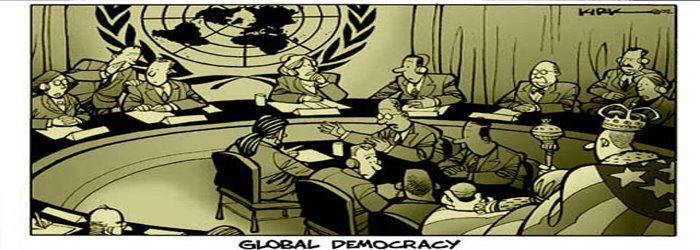
Is America in decline, or about ready to move to the next level?

Every contrarian bone I have in my body tells me that America is about ready to enter a new era of worldwide expansion on a grand scale, considerably necessitated by self-interest and quite possibly as a pre-requisite to behind the scenes political and diplomatic demand from those nations who fear current rising great powers who do not aspire to their cultural goals and ideals.

However, as noted in many publications, newscasts, university lectures, etc., America seems to be riding the path to insignificance that has plagued many other regional and world powers in the past, including the Greeks, Romans, Chinese (who are supposedly ready to take over), Byzantinians, and the English/British, to name a few.

Notwithstanding the negative 'press' concerning Americas certain decline, my thinking is inspired by many sources, including investment strategy used by many of the most successful money moguls on the planet. An example of this ideology can be illustrated by paraphrasing the investment doctrine of the great Warren Buffet, the worlds premier buyer and seller of everything, as he elaborates on the above mentioned contrarian ideology by stating, 'You pay a very high price in the stock market for a cheery consensus', and this would tell me that the opposite must also be true in that the current global morosity concerning America is evidence that it is ready to soar. 

Your thoughts would be very much appreciated, Anson
References:

http://www.investopedia.com/articles/financial-theory/08/contrarian-investing.asp

The Modern Scholar: The Tiber and the Potomac: Rome, America, and Empires of Trust
Thomas F. Madden

http://www.economist.com/blogs/freeexchange/2010/01/roots_american_dominance

http://www.guardian.co.uk/commentisfree/2008/sep/28/usforeignpolicy.useconomicgrowth

http://blogs.telegraph.co.uk/news/alexspillius/9363517/Obama_signals_the_end_of_American_dominance/